
The automotive landscape has undergone a seismic shift in recent years. Gone are the days when purchasing a vehicle required endless trips to the dealership, haggling over sticker prices under fluorescent lights, and signing paperwork that seemed to last forever. Today, the digital revolution has brought car buying directly to your living room, offering unprecedented convenience, transparency, and flexibility. Among the most attractive options for modern buyers is the ability to buy a car online with no down payment. This model appeals to those who want to preserve their liquid cash, prefer minimal upfront financial commitment, or simply find the traditional 10% to 20% down payment barrier frustrating. However, navigating this process requires a keen understanding of how it works, what the hidden costs might be, and how to secure the best possible deal without falling into a debt trap. This comprehensive guide will walk you through every aspect of buying a car online with no down payment, from preparation to final delivery, ensuring you make an informed decision that aligns with your financial health.
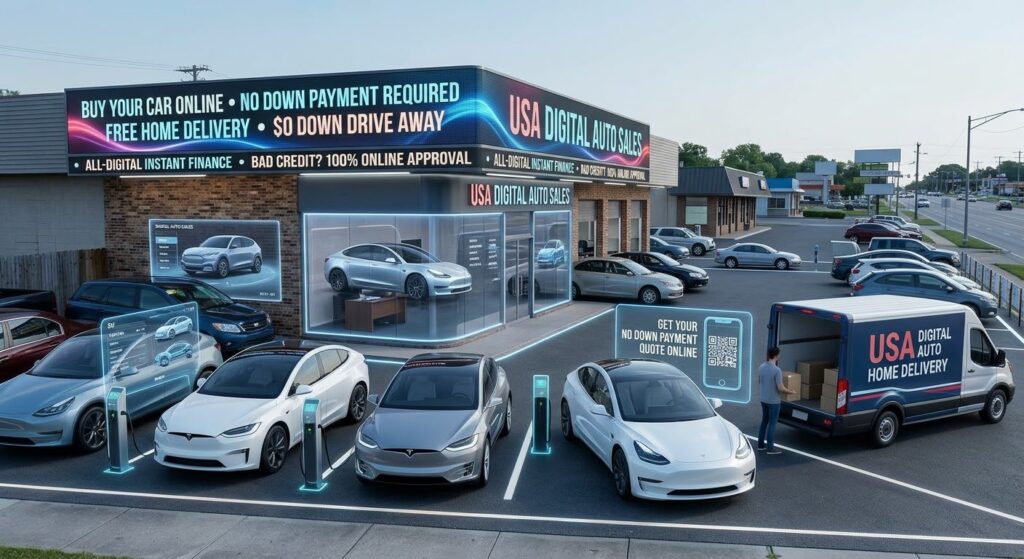
Understanding the “No Down Payment” Concept
To understand how to successfully purchase a car online with no money down, you must first demystify what this term actually means in the context of auto financing. A down payment is an initial upfront portion of the purchase price paid by the buyer, with the remainder financed through a loan. When a dealer or lender offers “no down payment,” they are essentially rolling all costs into the monthly installment. While this sounds appealing because it lowers the barrier to entry, it is crucial to recognize that you are not getting the car for free; you are deferring a significant portion of the cost.
When you opt for no down payment, your monthly payments will be higher than if you had put money down. Additionally, lenders often view borrowers with no skin in the game as slightly riskier, which can sometimes result in higher interest rates or stricter credit score requirements. Furthermore, because you are financing the full amount plus any applicable taxes, title fees, and registration costs, your total cost of ownership over the life of the loan will likely be higher. You will also find yourself “upside down” on the loan sooner rather than later, meaning the car’s depreciating value drops below the outstanding loan balance more quickly. If you were to crash the car or sell it early, you might owe more than the car is worth. Therefore, going into this process with eyes wide open is essential.
Preparing Your Financial Profile Before You Click “Buy”
Before browsing inventory online, you need to know exactly what you can afford. Lenders will scrutinize your financial profile rigorously, especially since you aren’t providing a cushion via a down payment. Your credit score is the single most important factor in determining whether you qualify for a no-down-payment offer and what interest rate you will receive. Generally, a credit score of 660 or higher is considered good, but for the best no-money-down deals, a score above 700 is ideal. If your credit is lower, you may still qualify, but expect significantly higher interest rates that could inflate your monthly payments to unmanageable levels.
Your debt-to-income ratio (DTI) is another critical metric. Lenders want to see that your existing debt obligations—such as student loans, credit card bills, and other loans—do not consume too much of your monthly income. A DTI below 36% is generally preferred, though some subprime lenders may go up to 45-50%. To prepare, gather your recent pay stubs, tax returns, proof of residence, and insurance details. Having these documents ready allows you to get pre-approved for a loan before you even look at cars, giving you negotiating power and a clear budget ceiling.
Additionally, consider your monthly cash flow carefully. Since you won’t have a down payment buffer, your monthly payment needs to fit comfortably within your budget alongside your other expenses. A common rule of thumb is that your total transportation costs (payment, insurance, fuel, maintenance) should not exceed 15-20% of your gross monthly income. Be realistic about your spending habits. If you are barely making ends meet, a no-down-payment car might seem like a relief initially, but the lack of equity could become a burden quickly.
Choosing the Right Vehicle: New vs. Used
One of the biggest decisions you face when buying online is whether to choose a new or used vehicle. Both options have distinct advantages and disadvantages when it comes to zero-down financing.
New Cars:
Buying a new car with no down payment is increasingly common thanks to manufacturers offering aggressive incentives to move inventory. New cars come with full warranties, the latest technology, and zero miles on the odometer. However, new cars depreciate rapidly—often losing 20% of their value in the first year alone. With no down payment, you start the loan with negative equity immediately. This means that if you decide to trade it in after two years, you might still owe thousands more than the car is worth. Additionally, new cars often require gap insurance, which covers the difference between what you owe and the car’s actual cash value if it is totaled.
Used Cars:
Used cars are generally cheaper, which means lower monthly payments and slower depreciation. Financing a used car with no down payment is often easier for those with average credit scores. However, you lose the manufacturer warranty, so you must factor in potential repair costs. It is vital to get a vehicle history report (like Carfax or AutoCheck) and consider a third-party inspection before committing. Some online retailers offer certified pre-owned (CPO) programs, which provide a middle ground: nearly new condition with a limited warranty, making them a safer bet for zero-down buyers.
Navigating the Online Buying Process
The internet has democratized car buying, allowing you to compare prices, features, and financing options from home. Here is a step-by-step breakdown of how to execute a successful online purchase with no down payment.
Step 1: Research and Shortlist
Start by visiting reputable online car marketplaces such as Carvana, Vroom, Shift, Cars.com, or Autotrader. Use filters to narrow down vehicles based on your budget, mileage, transmission type, and fuel efficiency. Pay close attention to the “out-the-door” price, which includes taxes, destination fees, and documentation charges. Sometimes dealers advertise a low monthly payment but hide high fees in the fine print. Create a shortlist of three to five vehicles that meet your criteria.
Step 2: Secure Financing or Get Pre-Approved
While many online retailers offer in-house financing, it is wise to get pre-approved for a loan from a bank or credit union first. This gives you a baseline interest rate to compare against the dealer’s offer. If the dealer can beat your pre-approval rate, great. If not, you can use your pre-approval letter as leverage during negotiation. For no-down-payment deals, ensure the lender explicitly states that no down payment is required and clarify if there are any origination fees added to the loan principal.
Step 3: Evaluate the Total Cost of Ownership
Don’t just look at the monthly payment. Calculate the total cost over the life of the loan. For example, a $300 monthly payment for 72 months costs $21,600. Compare this to the sticker price plus interest. Also, estimate insurance costs. Insurance premiums can vary significantly based on the car’s value, safety ratings, and repair costs. Use online insurance calculators to get an estimate before you commit.
Step 4: Virtual Inspection and Test Drive
Many online platforms now offer detailed virtual tours, HD video walkthroughs, and even live video chats with sales representatives. Take advantage of these tools to inspect the car for dents, scratches, or interior wear. Ask specific questions about the vehicle’s history and maintenance records. If possible, arrange for a mobile test drive where a representative brings the car to your home, or utilize return policies that allow you to drive the car for a few days and send it back if it doesn’t meet expectations.
Step 5: Review the Contract Carefully
Once you select a car, review the financing agreement meticulously. Look for clauses related to prepayment penalties, mandatory add-ons (like extended warranties or paint protection), and balloon payments. Ensure that the advertised “no down payment” terms are clearly stated and that no unexpected fees have been rolled into the loan without your explicit consent. Digital signatures make this process faster, but do not rush. Read every line.
Step 6: Delivery and Final Inspection
After signing, the car will be delivered to your doorstep, often within a few days. Upon delivery, perform a thorough inspection. Check for any damage incurred during shipping, verify that all features work correctly, and ensure the odometer reading matches what was promised. Most online retailers offer a satisfaction guarantee period (usually 7 days or 400 miles). If you find issues, notify them immediately within this window.
Pros and Cons of Buying Online with No Down Payment
Like any financial decision, this approach has its share of benefits and drawbacks. Understanding these will help you decide if it’s the right path for you.
Pros:
- Convenience: The entire process—from browsing to financing to delivery—can be done from your couch. No haggling, no pressure sales tactics.
- Cash Flow Preservation: Keeping your cash in the bank provides a financial buffer for emergencies or investments.
- Wide Selection: You are not limited to local dealerships. You can access inventory nationwide, giving you access to better deals and specific models that might not be available locally.
- Transparency: Online pricing is usually fixed, eliminating the guesswork of negotiation.
- Speed: Transactions are often faster than traditional dealership visits, with paperwork handled digitally.
Cons:
- Higher Interest Rates: Without a down payment reducing the loan principal, lenders may charge higher rates, increasing the total cost.
- Negative Equity Risk: As mentioned, rapid depreciation combined with no equity means you could owe more than the car is worth.
- Limited Physical Inspection: Even with videos, you cannot physically sit in the car or feel the ride quality before buying. Relying on return policies helps, but it adds logistical hassle.
- Add-On Fees: Online retailers often include high documentation fees or delivery fees that can inflate the price.
- Insurance Complexity: You need to arrange insurance before the car arrives, which can be tricky if you don’t have a VIN yet.
Tips to Maximize Your Deal
To ensure you get the best possible deal when buying a car online with no down payment, consider these expert tips:
- Shop Around: Don’t settle for the first offer. Compare prices across multiple online retailers. Prices can vary significantly for the same vehicle depending on the seller’s inventory needs.
- Negotiate the Price, Not Just the Payment: Salespeople often focus on lowering the monthly payment by extending the loan term (e.g., from 60 to 72 months). This reduces the payment but increases the total interest paid. Focus on the out-the-door price first.
- Consider a Shorter Loan Term: If your budget allows, opt for a 48-month or 60-month loan instead of a 72-month or 84-month loan. Shorter terms mean higher monthly payments but significantly less interest paid overall and faster equity buildup.
- Avoid Unnecessary Add-Ons: Dealers love to bundle extended warranties, tire and wheel coverage, and GAP insurance into the loan. Evaluate whether you truly need these. Many credit unions offer competitive extended warranties at lower costs.
- Check for Manufacturer Incentives: Even when buying from a third-party retailer, manufacturer rebates and incentives may apply. Ensure these are factored into the final price.
- Use Cash for Taxes and Fees: While the down payment is zero, you may still need to pay sales tax, title, and registration fees upfront. If possible, pay these in cash rather than rolling them into the loan to avoid paying interest on them.
Common Pitfalls to Avoid
- Ignoring the Credit Score Impact: Applying for multiple loans in a short period can temporarily ding your credit score. Try to get pre-approved within a two-week window to minimize the impact of hard inquiries.
- Overextending the Budget: It’s easy to fall in love with a higher-end model when the monthly payment seems manageable. Stick to your pre-determined budget. Remember that maintenance, fuel, and insurance will add to the cost.
- Not Reading the Fine Print: Hidden clauses about mandatory arbitration, prepayment penalties, or automatic renewal of leases can catch you off guard. Read everything.
- Assuming “No Down Payment” Means “No Cost”: As emphasized, you are borrowing more money. The interest cost is real and substantial. Do not mistake cash flow for savings.
Conclusion
Buying a car online with no down payment is a viable and increasingly popular option for savvy consumers who value convenience and flexibility. By understanding the mechanics of zero-down financing, preparing your financial profile, choosing the right vehicle, and navigating the digital marketplace with care, you can secure a reliable ride without depleting your savings. The key is to remain disciplined, read the fine print, and always look beyond the monthly payment to the total cost of ownership. Whether you choose a brand-new sedan or a certified pre-owned SUV, the digital age has empowered you to make smarter, more informed decisions. Just remember, while no down payment lowers the entry barrier, it raises the long-term cost. Plan accordingly, stay within your means, and enjoy the freedom of the open road.
Disclaimer: This article is for informational purposes only and does not constitute financial, legal, or professional advice. The information provided herein is based on general market trends and practices as of the time of writing and may vary by region, lender, and individual circumstances. Interest rates, fees, and financing terms are subject to change without notice. Always consult with a qualified financial advisor, credit counselor, or attorney before making significant financial decisions. Past performance and current market conditions do not guarantee future results. The author and publisher are not responsible for any errors, omissions, or outcomes resulting from the use of this information.