
For millions of people, the dream of owning a reliable vehicle is often held hostage by two seemingly insurmountable barriers: a less-than-perfect credit score and a limited budget for an upfront cash injection. The combination of bad credit low down payment has become one of the most sought-after phrases in the automotive world because it represents the golden ticket for those who have been told “no” by traditional banks. It offers a lifeline—a way to get back on the road, commute to work reliably, and maintain independence despite past financial missteps or lack of credit history. However, securing this deal requires more than just walking into a dealership with a checkbook; it demands strategy, patience, and a deep understanding of how lenders view risk when they are willing to take a chance on you.
To truly understand how to navigate this landscape, we must first demystify what these terms actually mean in the context of auto lending and then explore the specific strategies that can turn a “high-risk” borrower into an approved applicant.
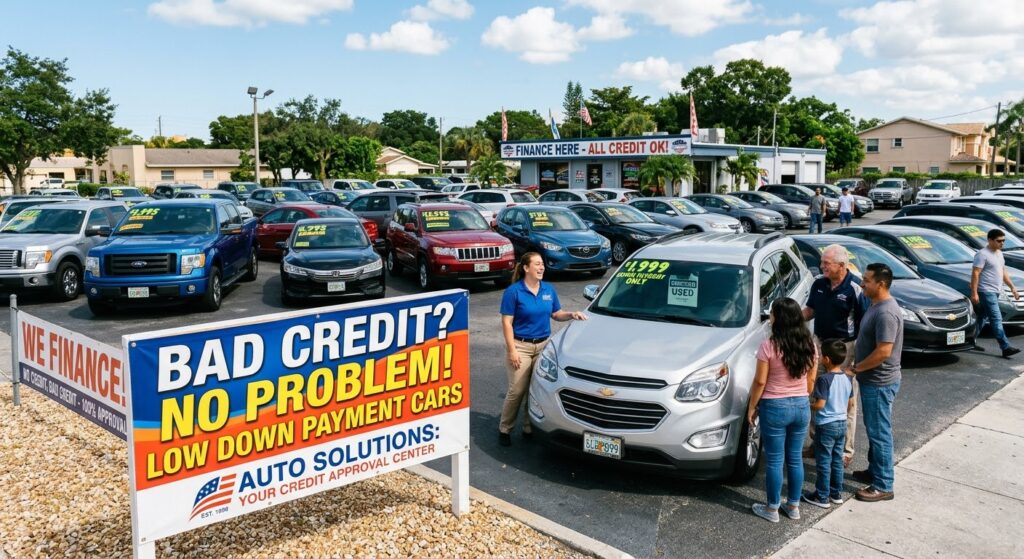
Understanding the Landscape: What Lenders Are Looking For
When you hear the term “bad credit,” it usually refers to a FICO score below 620, though some subprime lenders may go as low as 580 or even lower. “Low down payment” typically means putting down anywhere from zero to ten percent of the vehicle’s purchase price. While a standard loan might require twenty percent down for someone with average credit, bad credit loans often allow for minimal upfront cash because the lender is already compensating for the higher risk with higher interest rates.
The core dynamic here is simple: Risk vs. Reward. When you have bad credit, the lender views you as a statistical probability of defaulting. To mitigate this, they offer you two levers: a higher interest rate (which increases their profit over the life of the loan) and a lower down payment (which makes the car accessible to you now). If you put very little money down, your Loan-to-Value (LTV) ratio is high, meaning if you default tomorrow, the bank repossesses a car that is worth almost exactly what you owe them. Therefore, while low down payment options exist, they often come with stricter scrutiny regarding your current income and employment stability.
The Myth of “No Credit Check”
A common misconception is that “low down payment” implies “no credit check.” This is rarely true. Most legitimate dealerships and online lenders will still pull a credit report. However, there are “buy here pay here” (BHPH) lots where the credit check is minimal or non-existent. These lots are a primary destination for those seeking bad credit low down payment deals, but they come with their own set of trade-offs, which we will discuss later.
Step-by-Step Strategy to Secure Your Deal
Securing a car with bad credit and low down payment is not about luck; it is about presentation. You need to prove to the lender that while your past financial behavior was flawed, your current situation is stable enough to handle the new debt. Here is a comprehensive roadmap to achieving that goal.
1. Know Your Numbers Before You Walk In
The biggest mistake buyers make is arriving at a dealership blind. Before you look at a single car, you need to know your credit score. You can get this for free from various sources like Credit Karma, AnnualCreditReport.com, or your bank’s app. Knowing your exact score helps you target the right lenders. If your score is in the 500s, you need subprime specialists. If it is in the low 600s, you might qualify for near-prime lenders with better rates.
Simultaneously, determine exactly how much you can afford for a down payment. Be realistic. If you have $1,000 saved, that is your hard limit. Do not promise $2,000 and then scramble to find the extra cash. Lenders love certainty. Having a verified proof of funds—such as a bank statement showing the deposit amount ready to go—makes you look like a serious buyer rather than a desperate one.
2. Stabilize Your Income Documentation
When credit scores drop, income becomes king. Lenders want to see that you have a steady stream of money coming in to cover the monthly payments. Whether you are employed full-time, part-time, self-employed, or receiving disability or social security benefits, you need to organize your documentation.
Prepare a packet that includes:
- Recent pay stubs (last 30 days).
- Bank statements (last 2–3 months) showing consistent deposits.
- Proof of residence (utility bill or lease agreement).
- A letter from your employer verifying your employment status.
If you are self-employed, tax returns from the last two years are crucial. The more organized you are, the less the lender has to guess, and the faster your application moves toward approval.
3. Choose the Right Vehicle: Depreciation Matters
With bad credit, you are likely looking at older vehicles, often three to five years old. However, not all used cars are created equal. When you have a smaller down payment, every dollar counts. Avoid luxury brands (BMW, Mercedes, Audi) or vehicles with complex technology, as their repair costs can skyrocket. If you miss a payment and the car gets towed, you lose the asset. If you keep the car but cannot afford repairs, you might default anyway.
Stick to “workhorse” vehicles: Toyota Camry, Honda Civic, Ford F-150, or Chevrolet Silverado. These cars hold their value well, meaning if you do default, the bank recovers their money easily, which actually works in your favor when negotiating with aggressive subprime lenders. Furthermore, parts for these cars are cheap and abundant, making ownership cheaper in the long run.
4. Shop Around: The Power of Multiple Offers
Do not settle for the first dealership that calls you back. With bad credit, you are essentially shopping in the “subprime market,” which is highly competitive. Contact at least three to five different sources:
- Local Subprime Dealerships: Often have flexible criteria.
- Online Direct Lenders: Companies like Capital One Auto Finance, Ally, or Wells Fargo sometimes have programs for fair credit.
- Credit Unions: They often have more forgiving standards than big banks.
Get pre-approved from two or three places. This gives you “cash in hand” power. When you walk into a dealership, you can say, “I have an offer for $X per month. Can you beat it?” This shifts the power dynamic from “please approve me” to “compete for my business.”
5. Negotiate the Total Price, Not Just the Monthly Payment
This is the most critical negotiation tip for bad credit buyers. Dealers love to focus on the monthly payment. They might offer you a 7-year loan (84 months) with a low down payment. The monthly payment looks affordable, but you end up paying thousands more in interest over the life of the loan.
Always negotiate the out-the-door price of the car first. Once the price is agreed upon, then talk about financing. If you can secure a lower interest rate elsewhere, use that as leverage. Ask the dealer to match or beat that rate. If they can’t, consider taking the external loan and using the dealer’s car inventory.
The Trade-Offs: What You Need to Watch Out For
Getting a car with bad credit and low down payment is possible, but it comes with specific risks and costs that you must be aware of. Ignoring these can lead to financial distress down the line.
Higher Interest Rates (APR)
Expect to pay significantly more in interest. Where a person with good credit might pay 4% APR, you might see 12%, 15%, or even 20%. Over a 5-year loan, this difference can amount to thousands of dollars. Always calculate the total cost of the loan, not just the monthly bill. Use an online auto loan calculator to compare total interest paid across different offers.
Longer Loan Terms
To keep monthly payments low, dealers might stretch your loan to 72 or 84 months. This is dangerous because cars depreciate faster than you pay off the loan. You could easily end up “underwater” (owing more than the car is worth) within a year. If you refinance later, you might struggle to get a better rate because you are upside down on the loan. Aim for a 60-month term if possible.
Gap Insurance
Because your down payment is low, your equity in the car is slim. If the car is totaled in an accident, standard insurance pays out the actual cash value of the car, which might be less than what you owe the lender. Gap Insurance covers that difference. It is highly recommended for low down payment loans. Ensure your dealer quotes include this, or buy it separately from your insurance provider, which is often cheaper.
“Buy Here Pay Here” (BHPH) Lot Traps
BHPH lots are great for immediate approval, but they are notorious for predatory practices.
- High Prices: Cars on BHPH lots are often priced 10–20% above market value.
- Strict Repossession: Many BHPH contracts have “cross-collateralization” clauses or strict repossession triggers. If you miss a payment by a day, they may repossess the car immediately without giving you a grace period.
- Limited Inventory: You often have to buy whatever they have in stock, limiting your ability to choose a reliable model.
If you choose BHPH, read the contract meticulously. Look for hidden fees, mandatory add-ons (like extended warranties), and the exact repossession clause.
Alternative Strategies to Improve Your Odds
If you are struggling to get approved, consider these alternative approaches:
Add a Co-Signer
A co-signer with good credit and stable income can dramatically improve your chances. They are essentially guaranteeing the loan. If you pay on time, it helps both your scores. If you miss a payment, it hurts theirs. Make sure you trust your co-signer implicitly and treat their credit like your own.
Improve Your Debt-to-Income Ratio (DTI)
Lenders look at your DTI—the percentage of your gross monthly income that goes toward paying debts. If your DTI is too high (above 40-50%), you may be denied regardless of your down payment. Pay off small credit card balances or personal loans before applying. Even reducing your credit card utilization from 90% to 30% can boost your credit score quickly and lower your DTI, opening doors to better loans.
Save for a Larger Down Payment
While the goal is a low down payment, saving for a slightly larger one (e.g., moving from 5% to 10%) can unlock better interest rates. The extra equity acts as a buffer against depreciation, making you a safer bet for the lender.
Conclusion: Taking Control of Your Financial Future
Buying a car with bad credit and low down payment is not just about transportation; it is a financial exercise in resilience. It requires you to be disciplined, informed, and strategic. By knowing your numbers, stabilizing your income, choosing the right vehicle, and negotiating smartly, you can secure a deal that works for your current reality without burying you in debt.
Remember, the goal isn’t just to get approved; it’s to build a path back to excellent credit. Make every payment on time, keep your insurance current, and avoid adding unnecessary debt. Within a few years of responsible management, you will likely find yourself eligible for prime rates again, allowing you to refinance this high-interest loan into something much more manageable. The journey starts with that first step—getting behind the wheel and proving to the world, and to yourself, that you are capable of handling responsibility.
Disclaimer: The information provided in this article is for educational and informational purposes only and does not constitute financial, legal, or professional advice. Auto loan terms, interest rates, and lender requirements can vary significantly based on location, credit bureau data, and individual circumstances. Always read the fine print in any loan agreement, especially regarding prepayment penalties, late fees, and repossession clauses. Consider consulting with a certified financial advisor or credit counselor before making major financial decisions.