
Thinking about an auto loan? You’ve come to the right place. Chase (or JPMorgan Chase) is known for its robust financial services, but their auto loan rates aren’t as straightforward as other major banks. Many people assume that getting a loan from any bank is easy, but the reality is that Chase auto loan rates depend heavily on your credit score, down payment, and loan term.
In the current market conditions of 2026, due to Federal Reserve interest rates and inflation, banks are setting auto loan rates quite cautiously. This article will discuss in detail how Chase auto loan rates work, how they compare to other loans, and why this might be the best option for some borrowers.
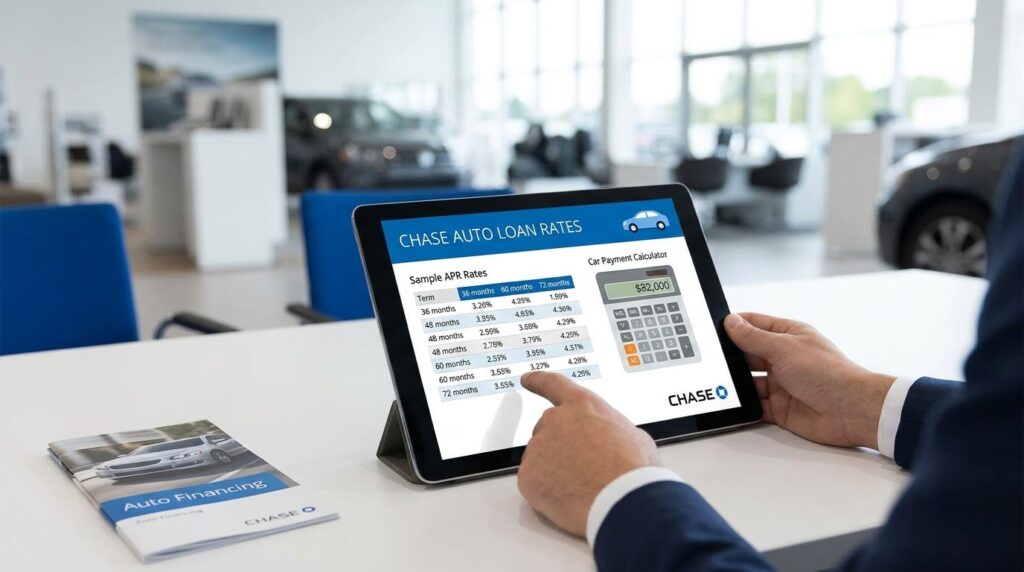
How Are Chase Auto Loan Rates Determined?
Chase doesn’t offer a single “fixed rate” to everyone. Their rate structure is personalized. This means they look at your entire financial profile before offering you a rate. However, several key factors influence the final rate offered:
- Credit Score: This is the most critical factor. If your credit score is above 750, you will likely receive the lowest interest rates. For scores between 680–749, rates may be slightly higher, and if your score is below 650, rates can increase significantly.
- Loan Term: Typically, shorter-term loans (e.g., 36 or 48 months) have lower interest rates. Longer-term loans (72 or 84 months) may have higher rates, although monthly payments might be lower.
- Vehicle Age and Type: New car loans often have lower rates than used car loans. This is because new cars hold their value better and present less risk to the bank.
- Down Payment: The larger your down payment, the smaller the loan amount, which can make the rate more negotiable.
Estimated Chase Auto Loan Rates for 2026
Note: The rates below are estimates and may vary based on your personal situation.
| Credit Score | New Car Estimated APR | Used Car Estimated APR |
|---|---|---|
| Excellent (750+) | 5.99% – 7.49% | 6.49% – 8.99% |
| Very Good (700-749) | 6.99% – 8.99% | 7.99% – 10.99% |
| Good (650-699) | 8.99% – 11.99% | 10.99% – 14.99% |
| Fair/Poor (Below 650) | 12.99% – 16.99%+ | 14.99% – 20.99%+ |
(Note: These rates may fluctuate with market changes.)
Pros and Cons of Chase Auto Loans
Every bank has its own advantages and disadvantages. Here’s what you need to know about Chase:
Advantages:
- Rewards Card Holder Benefits: If you hold a Chase Sapphire Preferred, Chase Infinite, or Chase Freedom Unlimited card, you may qualify for exclusive discounts or better rates. Chase often offers exclusive deals to its existing customers.
- Easy Application Process: Applying online is very straightforward. You can pre-qualify quickly using your Chase banking account.
- Flexibility: Chase provides loans for various types of vehicles—new, used, and in some cases, motorcycles or RVs.
Disadvantages:
- Lack of Dealer Discounts: Sometimes auto dealerships offer better rates than banks because they partner with specific lenders. Direct Chase loans might not include these dealer incentives.
- Strict Credit Requirements: Chase typically looks for good credit history. If your credit score is average, another bank or credit union might offer you a better rate.
- Fees: There may be processing fees or other small charges that increase the total cost of the loan.
Steps to Apply for a Chase Auto Loan
- Pre-Qualify: Go to the Chase website and use the “Check Your Rate” option. This performs a soft pull (no impact on your credit score) and gives you an estimated rate.
- Set Your Budget: Don’t just look at the monthly payment. Consider the total loan amount, interest rate, and term.
- Contact the Dealership: When at the dealership, show them your Chase offer and ask if they can provide any additional discounts.
- Submit Final Application: If the rate suits you, submit the final application. Your income, employment, and other financial details will be verified.
- Approval and Funding: Once approved, Chase sends the money to the dealership, and you drive off in your new car.
Chase Auto Loan vs. Other Options
Many people think Chase is the best option, but the truth is—compare!
- Credit Unions: Credit unions often offer lower interest rates than banks. If you are a member of a credit union, check their rates first.
- Auto Finance Companies: Some specialized companies lend to people with bad credit, but the rates can be high.
- Home Equity Line of Credit (HELOC): If you have significant equity in your home, a HELOC might offer a lower rate than an auto loan, as home loan rates are generally lower than auto loan rates.
Final Thoughts: Is Chase Auto Loan Right for You?
Chase auto loans are best for people with good credit scores, those who already use Chase services (like credit cards or bank accounts), and those who prefer a quick, streamlined process. However, given the higher interest rates in 2026, it is essential to compare at least two or three sources. Don’t base your decision solely on Chase’s rates.
Check your credit score, set your budget, and make an informed decision. A good auto loan strengthens your financial health, while a bad one can drain your money year after year.
Disclaimer:
This article is for informational purposes only and does not constitute financial advice. Chase auto loan rates, terms, and fees are subject to change. The rates mentioned here are estimates and may vary based on individual credit history, down payment, and other factors. For accurate and up-to-date rates, please visit the official Chase website (chase.com) or contact their customer care. Before taking any loan, carefully consider your financial situation and consult with a financial advisor if necessary.