
Finding the best auto loan rates can help you save money when purchasing a new or used vehicle. Even a small difference in the interest rate can affect your monthly payment and the total amount you pay over the life of a loan.
For car buyers in the United States, auto financing is available through banks, credit unions, online lenders, and dealership finance departments. Each provider may evaluate applications differently, which means the most attractive offer for one borrower may not be the best option for another.
The key is to look beyond advertised rates and compare the complete financing package. Your credit history, loan term, down payment, vehicle type, and lender fees can all influence the final cost.
This guide explains how to find competitive auto loan rates, compare financing offers, and choose a loan that fits your budget without creating unnecessary financial pressure.
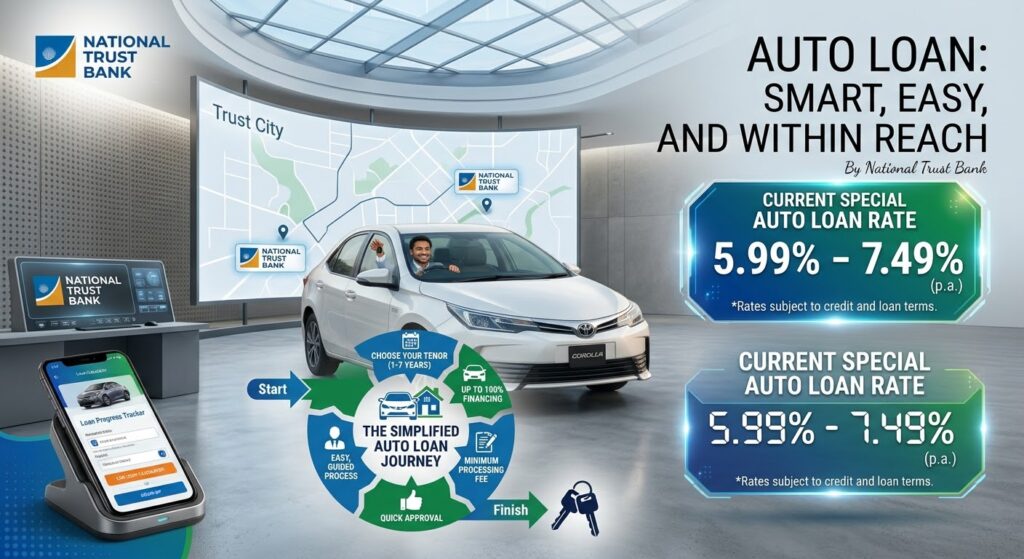
What Are the Best Auto Loan Rates?
The best auto loan rates are the most competitive financing rates available to you based on your financial circumstances and the vehicle you want to purchase.
There is no single rate that is best for every borrower. Someone with an established credit history may qualify for different terms than a first-time car buyer or someone rebuilding their credit.
Rates can also vary by lender, vehicle age, repayment period, and prevailing market conditions.
When evaluating an offer, look at the annual percentage rate (APR), total interest, fees, monthly payment, and repayment schedule. A low advertised interest rate may look attractive, but the final agreement could include conditions that make the overall deal less appealing.
A suitable loan should offer competitive terms while keeping the monthly payment and total borrowing cost within your financial limits.
Where Can You Find Competitive Auto Loan Rates?
Different types of lenders offer different advantages. Comparing several sources can help you identify a financing option that matches your needs.
- Credit Unions
Credit unions are member-owned financial institutions that offer a variety of financial products, including auto loans.
Some credit unions provide competitive rates to eligible members. However, membership requirements, loan terms, and vehicle restrictions vary.
Before applying, check whether you qualify for membership and compare the credit union’s complete offer with other available financing options.
A credit union may be worth considering if you already belong to one or can easily meet its membership requirements.
- Banks
Banks provide auto financing through established lending programs. Some offer online applications, preapproval options, and tools for estimating monthly payments.
The rates available depend on the bank’s lending policies and your financial profile. Existing customers should not assume they automatically receive the lowest available rate.
Request a quote and compare the APR, repayment term, fees, and eligibility requirements with offers from other providers.
- Online Auto Lenders
Online lenders allow borrowers to research financing options and submit applications through digital platforms.
Depending on the provider, you may be able to compare loan terms, obtain a prequalification estimate, or complete much of the application process online.
Before sharing personal information, verify that the lender is legitimate. Review its official website, privacy practices, fees, and loan agreement.
Also check whether an advertised rate is available to your credit profile or represents the lowest rate offered only to highly qualified applicants.
- Dealership Financing
Dealership financing allows buyers to arrange a loan through a car dealer, often using one or more lending partners.
Some manufacturers and dealerships offer promotional financing for selected vehicles and qualified customers. These offers may include eligibility restrictions or conditions that affect other purchase incentives.
Compare the dealer’s written offer with an independent quote from a bank or credit union. Evaluate both the vehicle price and financing terms instead of focusing only on the advertised monthly payment.
What Determines the Best Auto Loan Rate for You?
Lenders consider several factors when determining which financing offers are available to an applicant.
Credit Score and Credit History
Your credit profile can have a significant influence on the rate you receive.
Lenders may review credit scores, repayment history, outstanding balances, and the length of your credit history. Applicants with stronger credit profiles may qualify for lower rates, although approval and pricing depend on the lender’s criteria.
Before applying, review your credit reports for errors. If you find inaccurate information, dispute it with the relevant credit reporting agency.
If your credit history is limited, compare lenders that consider applicants with different credit backgrounds. Avoid accepting an expensive loan simply because it is the first offer available.
Down Payment
A down payment reduces the amount you need to finance.
For example, suppose a vehicle costs $28,000. If you contribute $6,000 upfront, the amount financed would be $22,000 before taxes, fees, and other adjustments.
Borrowing less generally reduces monthly payments and total interest costs when other loan conditions remain the same.
A larger down payment may also help reduce the risk of owing more than the vehicle is worth. However, preserve enough savings to cover emergencies and other essential expenses.
Loan Term
The loan term is the period over which you repay the loan.
Common auto loan terms include 36, 48, 60, and 72 months, although other options may be available.
Longer terms usually produce lower required monthly payments for the same loan amount and interest rate. However, they can increase total interest costs and extend the period during which your loan balance may exceed the vehicle’s value.
A shorter term may cost less overall but requires a larger monthly payment. Compare multiple terms before deciding.
New or Used Vehicle
The type of vehicle you purchase may affect your financing options.
New vehicles may qualify for promotional financing, while used vehicles may have different rates and eligibility requirements based on age, mileage, and condition.
Compare the full purchase price, interest costs, expected maintenance, and available discounts. A lower rate does not automatically make a more expensive vehicle the better financial choice.
Income and Existing Debts
Lenders may review your income, employment information, and existing debt obligations when assessing your application.
Your monthly payment should remain manageable after accounting for housing, utilities, insurance, groceries, savings, and other necessary expenses.
Choose a loan based on what you can comfortably afford rather than borrowing the maximum amount a lender approves.
How to Compare Auto Loan Offers Correctly
Finding competitive financing involves comparing the same information across different lenders.
Compare APR Instead of Interest Rate Alone
The annual percentage rate generally reflects the interest rate and certain additional borrowing costs.
When reviewing offers, compare the APR alongside the loan amount, term, fees, and repayment conditions. Make sure you understand which charges are included in the quoted APR.
This approach can provide a clearer picture of the financing cost than comparing advertised interest rates alone.
Calculate Total Interest
A lower monthly payment does not necessarily mean you are getting a better deal.
Consider a hypothetical loan of $24,000 with a fixed annual interest rate of 6.5% and a 60-month repayment term. Assuming standard monthly amortization and no additional fees, the estimated payment would be approximately $470 per month.
Total payments would be around $28,200, including approximately $4,200 in interest.
If you receive a different rate or choose another term, the payment and total interest will change.
These figures are illustrative estimates, not current lender quotations. Taxes, fees, insurance, and vehicle ownership expenses are excluded.
Check for Additional Fees
Some financing arrangements may include documentation charges, origination fees, late payment fees, or optional products.
Ask the lender to explain all charges before signing. Review whether optional services are included in the amount financed and whether you actually want them.
A slightly higher advertised rate may sometimes be associated with a lower overall cost once all applicable fees are considered.
Review the Entire Purchase Agreement
Financing and vehicle pricing are related, but they should be evaluated separately.
Negotiate or review the vehicle’s purchase price, trade-in value, down payment, financing terms, and additional products. Make sure the final agreement reflects what you accepted.
Do not sign until you understand the total amount financed and the complete repayment obligation.
How to Get the Best Auto Loan Rates
You cannot control every factor that determines a lender’s offer, but you can take practical steps to improve your chances of finding competitive financing.
Step 1: Check Your Credit Reports
Review your credit reports before beginning the application process.
Correcting inaccurate information may help ensure lenders assess your actual credit history. If you have outstanding debts, consider how your current obligations affect your budget before taking on another payment.
Step 2: Set a Realistic Budget
Decide how much you can afford to spend on the vehicle and its ongoing costs.
Remember that car ownership involves more than loan payments. Insurance, fuel, maintenance, registration, parking, and repairs can all affect your monthly budget.
Step 3: Get Multiple Quotes
Request offers from several reputable lenders. Depending on your circumstances, you might compare a bank, credit union, online lender, and dealership financing provider.
Ask each provider for the APR, loan term, monthly payment, total repayment amount, and applicable fees.
Step 4: Consider Preapproval
Preapproval may help you estimate your potential loan amount and financing terms before shopping at a dealership.
It can also give you a useful comparison point when reviewing dealer financing. However, preapproval does not always guarantee final approval or an unchanged interest rate.
Confirm the final terms before agreeing to the purchase.
Step 5: Compare Different Loan Terms
Ask lenders to provide estimates for more than one repayment period when possible.
A shorter term may reduce the total interest paid but increase your monthly obligation. A longer term may improve monthly affordability while increasing the total cost.
Choose the term that balances overall cost with a payment you can sustain.
Step 6: Read the Contract Before Signing
Verify the APR, loan amount, repayment schedule, fees, and total of payments.
Check the conditions for late payments and early repayment. If any part of the agreement is unclear, request an explanation before proceeding.
Are Promotional Auto Loan Rates Worth It?
Promotional financing may be attractive when a manufacturer or dealership offers a low rate to eligible buyers.
However, these offers may be restricted to specific vehicles, credit profiles, or repayment terms. Some promotions may also affect eligibility for other discounts or incentives.
Before accepting a promotional offer, compare the total amount you would pay with the amount you would pay under alternative financing and pricing arrangements.
A low interest rate can be valuable, but it should be evaluated alongside the vehicle price, fees, and other available incentives.
Can You Get the Best Auto Loan Rates With Bad Credit?
Borrowers with lower credit scores may still qualify for auto financing, but available rates and terms may be less favorable.
Some lenders consider applicants with limited or challenged credit histories. Depending on the lender, you may need a larger down payment or may qualify for a smaller loan amount.
Compare several offers before accepting financing. Pay particular attention to APR, fees, total repayment costs, and whether the payment fits your budget.
Be cautious about claims of guaranteed approval that do not clearly explain the financing conditions. A loan that is easy to obtain may still be expensive over its full term.
If you can delay the purchase, reviewing your credit reports, reducing existing debt, or saving a larger down payment may improve your options.
Should You Refinance to Get a Better Auto Loan Rate?
Refinancing means replacing your current auto loan with a new financing agreement.
It may be worth considering if your credit profile has improved, you qualify for a lower APR, or your existing loan has unfavorable terms.
Before refinancing, compare the new interest rate, fees, remaining balance, repayment period, and total expected payments.
Extending the term can reduce the monthly payment while increasing the total interest paid. You should also consider how much you have already repaid and whether the new loan provides meaningful savings.
Calculate the difference between keeping your current loan and accepting the new offer before making a decision.
Common Mistakes When Searching for the Best Auto Loan Rates
Avoid these mistakes when comparing auto financing options:
- Choosing the first offer: Comparing several lenders may reveal better terms.
- Focusing only on monthly payments: Longer repayment periods can increase the total borrowing cost.
- Ignoring APR: The advertised interest rate may not show all relevant credit costs.
- Overlooking fees: Additional charges may affect the total amount you repay.
- Borrowing too much: A high loan balance can strain your finances.
- Ignoring vehicle depreciation: The outstanding balance may exceed the vehicle’s market value.
- Skipping contract details: Understand the repayment requirements before signing.
Careful research can help you avoid unnecessary costs and choose financing that meets your needs.
Frequently Asked Questions
Where can I find the best auto loan rates?
You can compare financing offers from banks, credit unions, online lenders, and dealerships. The best option depends on your credit profile, vehicle, loan term, and the lender’s current terms.
What is considered a good auto loan rate?
A competitive rate depends on current market conditions and your eligibility. Compare recent offers for similar loan types and terms rather than relying on a universal benchmark.
Do I need excellent credit to get a low auto loan rate?
Stronger credit profiles may qualify for more competitive offers, but excellent credit is not the only factor. Loan term, lender policies, vehicle type, and other financial information can also affect pricing.
Does shopping around for auto loans hurt my credit?
Some rate-checking tools use soft inquiries that do not affect your credit score. Formal applications may involve hard inquiries. Depending on the scoring model, qualifying auto loan inquiries within a specified shopping window may be grouped together.
Ask each lender how its application process works before submitting your information.
Is a credit union better than a bank for auto financing?
Neither is automatically better. Compare their actual APRs, fees, eligibility requirements, and repayment terms to determine which offer suits your circumstances.
Should I choose the lowest monthly payment?
Not necessarily. A lower payment may result from a longer loan term and could increase total interest costs. Compare the complete repayment amount before deciding.
Can I negotiate an auto loan rate?
You can ask a lender or dealership whether better terms are available. Written offers from other providers may help you compare your options, although a lender is not required to match another offer.
Final Thoughts
Finding the best auto loan rates starts with understanding your financial position and comparing multiple financing offers.
Review your credit profile, establish a realistic vehicle budget, compare APRs, and calculate the total repayment cost. Consider the loan term carefully and make sure the payment leaves enough room for insurance, maintenance, and other essential expenses.
The best financing option is not necessarily the one with the lowest advertised rate. It is the offer that provides suitable terms, transparent costs, and a repayment schedule you can manage comfortably.
Disclaimer: This article is for educational purposes only and does not constitute financial, legal, or tax advice. Auto loan rates, eligibility requirements, and financing terms vary by lender, borrower, vehicle, and market conditions. Verify current offers directly with lenders before making a financial decision.