
Leasing a car is often described as renting it for the long term, but that analogy only captures half the picture. A lease is a financial instrument designed to allow you to drive a new vehicle while paying primarily for its depreciation during the time you hold it, rather than the entire cost of ownership. However, understanding exactly how much your lease will cost requires navigating a maze of financial terms like residual value, money factor, and cap cost. This is where a car lease calculator becomes an indispensable tool. Whether you are a first-time lessee or a seasoned driver looking to optimize your next deal, mastering the mechanics behind the numbers can save you thousands of dollars. This article breaks down everything you need to know about using a car lease calculator effectively, demystifying the math, and ensuring you get the best possible deal on your next ride.
Why Use a Car Lease Calculator?
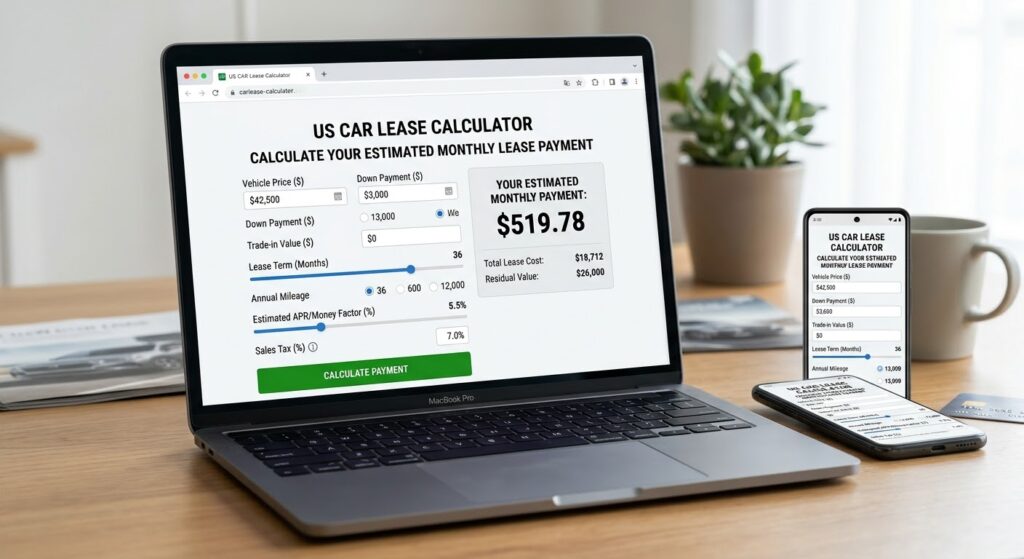
At first glance, leasing seems simple. You pick a car, agree on a monthly payment, and sign the papers. In reality, dealerships have sophisticated pricing structures that can obscure the true cost of the lease. A car lease calculator helps you cut through the marketing fluff. It allows you to reverse-engineer the dealer’s offer to see what they are actually charging you for interest versus depreciation. Without a calculator, you might accept a low monthly payment that hides a high residual value or a steep money factor. By plugging in different variables, you can compare multiple lease offers side-by-side, negotiate from a position of knowledge, and avoid overpaying for features you don’t need.
Furthermore, a calculator helps you understand the impact of taxes. Since leases are taxed based on the monthly payment rather than the total purchase price, the tax implications vary significantly by state. A good calculator accounts for these regional differences, giving you a more accurate picture of your out-the-door costs. It transforms abstract financial jargon into concrete dollar amounts, empowering you to make informed decisions rather than emotional ones.
The Anatomy of a Lease Calculation
To truly utilize a car lease calculator, you must understand the core components that feed into the formula. These elements determine your monthly payment, which is generally composed of two parts: the depreciation fee and the finance fee.
1. Capitalized Cost (Cap Cost)
This is essentially the “price” of the car for the lease. It includes the Manufacturer’s Suggested Retail Price (MSRP), any additional options or packages, and sometimes the destination charge. However, it also includes negotiated-down prices, such as rebates, discounts, or trade-in values. If you trade in an old car, its value is applied to the cap cost, reducing the amount you are financing. A lower cap cost directly translates to a lower monthly payment. When using a car lease calculator, ensure you input the final negotiated price, not just the sticker price, to get an accurate result.
2. Residual Value
The residual value is the estimated worth of the car at the end of the lease term. This percentage is usually set by the leasing company (often based on guidelines from J.D. Power or similar agencies) and is expressed as a percentage of the MSRP. For example, if a car has a residual value of 50% after three years, the leasing company expects to sell it for half its original value. A higher residual value is better for you because it means the car depreciates less, resulting in lower monthly payments. When comparing leases, look for those with higher residual percentages, as this indicates the leasing company believes the car holds its value well.
3. Money Factor
The money factor is the interest rate equivalent in a lease. It is often confusing because it is presented as a small decimal number, such as 0.0025. To convert the money factor to an annual percentage rate (APR), simply multiply it by 2400. So, a money factor of 0.0025 equals a 6% APR. Some leases come with subvented rates, where the manufacturer subsidizes the interest rate to promote sales, resulting in a very low money factor (sometimes even zero). Using a car lease calculator allows you to plug in different money factors to see how much you are paying in interest compared to the depreciation portion of your payment.
4. Lease Term
The length of the lease, typically ranging from 24 to 60 months, affects both the monthly payment and the residual value. Shorter leases usually have higher monthly payments because the car depreciates faster in its first few years. Longer leases spread the cost over more months, lowering the monthly bill, but the car may depreciate more rapidly in later years, and you might be responsible for excess wear and tear or mileage overages. The calculator helps you visualize these trade-offs, helping you decide whether a shorter term with higher payments or a longer term with lower payments suits your budget better.
5. Mileage Allowance
Most leases come with an annual mileage limit, commonly 10,000, 12,000, or 15,000 miles per year. If you exceed this limit, you pay a penalty per mile, often ranging from $0.15 to $0.30. While some advanced calculators include mileage penalties in their projections, it is crucial to choose a mileage allowance that matches your driving habits. If you drive a lot, paying extra upfront for a higher mileage cap is often cheaper than paying penalties at the end of the lease.
How to Use a Car Lease Calculator Effectively
Using a car lease calculator is straightforward, but getting the most out of it requires a strategic approach. Here is a step-by-step guide to maximizing its utility.
Step 1: Gather Your Numbers
Before opening the calculator, gather all relevant information. Know the MSRP, the negotiated selling price, any cash rebates, your trade-in value (if applicable), and the desired lease term. Also, find the advertised residual value and money factor for the specific trim level and lease duration you are interested in. Dealerships often quote these numbers, but verifying them independently ensures accuracy.
Step 2: Input the Data
Enter the capitalised cost, residual value, money factor, and lease term into the calculator. Be precise with the numbers. If the calculator asks for the money factor, enter it as a decimal (e.g., 0.0025). If it asks for the interest rate, convert the money factor using the 2400 multiplier. Some calculators allow you to input sales tax; ensure you select the correct rate for your state.
Step 3: Analyze the Breakdown
Look beyond the monthly payment. A good calculator will break down the payment into depreciation and finance charges. Compare these two figures across different lease offers. If one lease has a lower monthly payment but a much higher finance charge, it might mean you are paying more in interest due to a higher money factor. Conversely, if another lease has a higher monthly payment but a much lower finance charge, it might be a better deal overall because you are building less equity loss.
Step 4: Experiment with Variables
Use the calculator to test “what-if” scenarios. What happens if you increase the mileage allowance? How does a shorter lease term affect the residual value? What if you put more money down upfront? By adjusting these variables, you can find the sweet spot that balances your monthly budget with your long-term goals. For instance, you might discover that paying $50 more per month for a two-year shorter lease saves you $2,000 in total costs and avoids excess mileage fees.
Step 5: Negotiate with Confidence
Armed with your calculations, you can negotiate with the dealer more effectively. If they quote a monthly payment that seems high, you can point out that the money factor is inflated or that the residual value is too low. You can propose alternative terms, such as a different lease duration or mileage limit, and show the dealer the resulting payment. This data-driven approach shifts the dynamic from a haggling game to a collaborative negotiation based on facts.
Common Mistakes to Avoid
Even with a reliable car lease calculator, users can fall into common traps that lead to overpaying. Being aware of these pitfalls can help you secure a better deal.
Ignoring Fees
Many leases come with hidden fees, such as acquisition fees, disposition fees, and early termination fees. A basic calculator might only show the monthly payment, ignoring these upfront and end-of-lease costs. Always add these fees to your total cost analysis. An acquisition fee of $500, for example, adds roughly $17 to your monthly payment over a 36-month lease. Disposition fees, charged when you return the car, can range from $300 to $500. Factor these into your decision-making process to avoid surprises.
Overlooking Wear and Tear
Leases require the vehicle to be returned in good condition, subject to “normal wear and tear.” However, definitions of normal wear and tear can vary. Scratches, dents, and interior stains may incur charges if deemed excessive. While a calculator doesn’t account for this, keeping an eye on your vehicle’s condition throughout the lease can prevent unexpected bills at the end. Some leases offer certified pre-owned programs or extended maintenance plans that cover certain repairs; consider these options if available.
Chasing Low Monthly Payments
It is easy to get fixated on the lowest possible monthly payment. However, a low payment often comes with trade-offs, such as a longer lease term, higher mileage limits, or a higher money factor. Always look at the total cost of the lease, including all fees and potential penalties. A slightly higher monthly payment might result in significant savings over the life of the lease due to better residual values or lower interest rates.
Not Shopping Around
Dealerships often have access to different leasing programs from various manufacturers. One dealership might offer a subvented rate with a low money factor, while another might offer a higher residual value. Use the calculator to compare offers from multiple sources. Don’t settle for the first deal you hear; shop around to find the best combination of price, terms, and incentives.
Advanced Strategies for Savvy Lessees
For those who want to go beyond the basics, there are advanced strategies to leverage when using a car lease calculator.
Subvented Leases
Manufacturers often subsidize lease deals to move inventory or promote new models. These subvented leases feature unusually low money factors or high residual values. Keep an eye out for these promotions, especially at the end of the model year or during holiday sales events. Using a calculator, you can quickly identify whether a subvented deal is genuinely better than standard leasing options.
Closed-End vs. Open-End Leases
Most consumer leases are closed-end, meaning you return the car at the end and owe nothing more, provided you stay within mileage and wear-and-tear limits. Open-end leases, more common in commercial contexts, require you to pay the difference between the residual value and the market value at the end of the lease. This exposes you to market risk. Ensure you understand which type of lease you are entering into, as it significantly impacts your financial liability.
Early Termination Options
Life is unpredictable, and you might need to end your lease early. Some leases allow you to buy out the lease or transfer it to another party. Calculate the cost of early termination versus the remaining payments to determine the best course of action. Some calculators can help you estimate the buyout price, allowing you to decide if purchasing the car is a viable option.
Tax Implications
In some states, sales tax is applied to the full purchase price of the car, while in others, it is applied only to the monthly payments. This distinction can significantly impact your total cost. Use a calculator that accounts for your local tax laws to get an accurate comparison. Additionally, if you use the car for business, you may be able to deduct the lease payments. Consult with a tax professional to understand how leasing compares to buying from a tax perspective.
Conclusion
A car lease calculator is more than just a number-crunching tool; it is a key to unlocking transparency in the leasing process. By understanding the components of a lease—capitalized cost, residual value, money factor, and lease term—you can demystify the monthly payment and negotiate from a position of strength. Avoid common pitfalls like chasing low monthly payments without considering total costs, and remember to factor in fees, taxes, and mileage allowances. Whether you are a first-time lessee or a seasoned driver, leveraging a car lease calculator empowers you to make informed decisions, save money, and enjoy your new vehicle without financial stress. In a world of complex financial products, knowledge is power, and the right calculator gives you that power right at your fingertips.
Disclaimer: The information provided in this article is for educational purposes only and should not be considered financial, legal, or tax advice. Lease terms, residuals, and money factors can vary by region, dealership, and time. Always consult with a qualified financial advisor or tax professional before making significant financial decisions. The examples and calculations mentioned are illustrative and may not reflect current market conditions or individual circumstances.