
Buying a car is one of the most significant financial decisions most people make in their lifetime. It is not merely a transaction; it is a commitment that can span several years, influencing your monthly budget, your savings potential, and even your lifestyle choices. Whether you are looking for a reliable daily commuter, a family hauler, or a weekend adventure vehicle, securing the right financing is crucial. For many buyers, the magic number sits around ten thousand dollars. A 10000 car loan represents a specific tier of automotive financing that requires its own set of strategies, considerations, and understanding. This guide dives deep into what it takes to secure this type of loan, how to negotiate effectively, and how to avoid the common pitfalls that can turn a dream purchase into a financial burden.
Understanding the Landscape of a $10,000 Car Loan
A ten-thousand-dollar loan is neither a trivial sum nor an astronomical debt. It typically falls into the category of “affordable used cars” or “entry-level new vehicles,” depending on current market conditions and interest rates. In recent years, as vehicle prices have fluctuated, ten thousand has become a very common price point for quality pre-owned vehicles. These cars often offer the best balance between depreciation and reliability. You are buying something that still has plenty of life left but has already taken the steepest part of the depreciation curve.
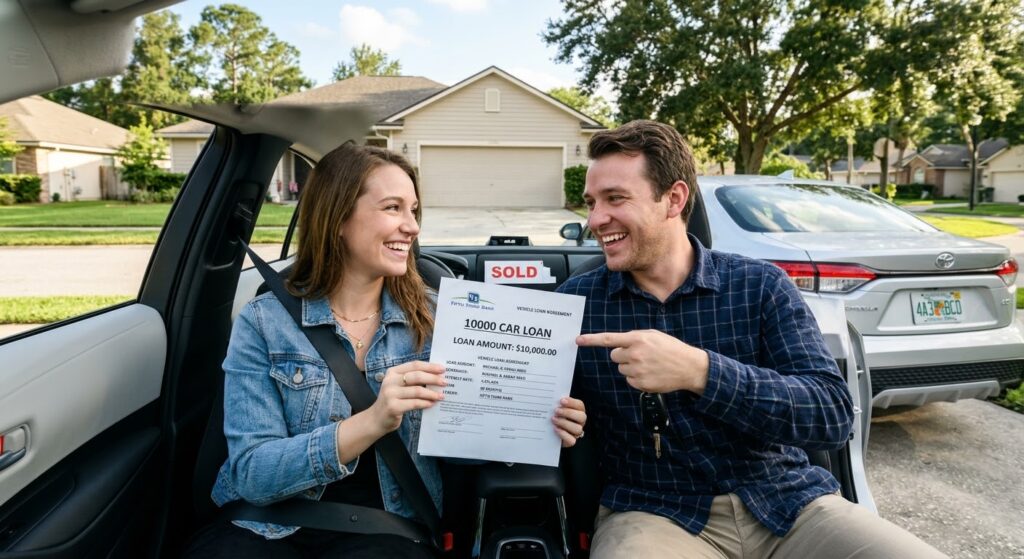
However, the loan amount itself tells only half the story. The real cost lies in the terms attached to that principal. When you take out a 10000 car loan, you are essentially renting money from a lender. The cost of that rent varies wildly based on your credit score, the length of the loan term, and the prevailing interest rates. A borrower with excellent credit might secure an annual percentage rate (APR) of six percent, while someone with fair or poor credit might see rates climb to twelve percent or higher. Over the life of the loan, that difference can mean paying thousands of dollars more in interest alone.
It is also important to distinguish between the loan amount and the out-the-door price. If you need exactly ten thousand dollars to cover the purchase, your loan will be for ten thousand. But if you are rolling taxes, registration, and fees into the loan, your actual loan amount might exceed ten thousand, even if the sticker price of the car is lower. Conversely, if you plan to make a down payment, your loan amount will be less than the purchase price. Understanding this distinction is vital for avoiding being “upside down” on your loan—owing more than the car is worth—if you decide to sell or trade it in early.
Credit Scores and Eligibility: The Gatekeepers of Interest Rates
Your credit score is the single most important factor in determining whether you get approved for a 10000 car loan and what interest rate you will pay. Lenders view your credit score as a predictor of risk. A high score suggests you have managed past debts responsibly, making you a safe bet for lending. A low score suggests a history of missed payments or high utilization, making you a riskier investment.
For a loan of this size, lenders generally look for a FICO score of at least 620 to consider you “prime” or near-prime. If your score falls below this threshold, you may still qualify, but you will likely face subprime rates. Subprime loans often come with stricter terms, such as requiring a larger down payment or shorter loan durations.
Let us look at how credit tiers affect a 10000 car loan. Suppose you have a credit score above 750. You might qualify for an APR of five to seven percent. On a five-year loan, this results in total interest payments of roughly eight hundred to eleven hundred dollars. If your score drops to the 580–620 range, your APR might jump to nine to twelve percent. Suddenly, that same loan costs over fifteen hundred to two thousand dollars in interest. That is hundreds of dollars lost simply because of a number on a credit report.
If your credit is less than perfect, do not despair. There are ways to improve your odds. Paying down existing credit card balances before applying can significantly boost your score. Ensuring there are no errors on your credit report is also critical. Sometimes, a simple clerical error can drag down your score by dozens of points. Disputing these errors can lead to immediate improvements in your eligibility.
Loan Terms: Choosing the Right Duration
When taking out a 10000 car loan, you will be offered various loan terms, commonly ranging from thirty-six months to seventy-two months, and sometimes up to eighty-four months. Each term presents a trade-off between monthly affordability and total cost.
Shorter terms, such as thirty-six or forty-eight months, mean higher monthly payments but significantly lower total interest costs. For example, a 10000 car loan at seven percent APR for three years would result in a monthly payment of approximately three hundred and four dollars, with total interest paid around nine hundred dollars. In contrast, extending the term to sixty months reduces the monthly payment to about one hundred ninety-seven dollars, but the total interest paid jumps to nearly two thousand dollars.
Many buyers are tempted by the lower monthly payment of a longer term. It makes the car feel more affordable in the short term. However, this strategy often leads to being “upside down” on the loan for a longer period. Because cars depreciate faster in the first few years, a longer loan means you are paying for the car long after it has lost a significant portion of its value. If you want to upgrade or sell the car in three or four years, you might owe more than it is worth.
A balanced approach is often recommended. Aim for a term that keeps your monthly payment within fifteen to twenty percent of your monthly take-home pay. If a sixty-month loan fits that budget comfortably, it might be acceptable. But if stretching the term to keep the payment low means you will be driving a car you cannot afford to replace for seven years, you are tying yourself down unnecessarily.
The Role of Down Payments and Trade-Ins
While a 10000 car loan implies borrowing ten thousand dollars, bringing cash to the table can reduce that amount. A down payment serves two purposes: it lowers the principal balance, reducing the total interest paid, and it provides equity in the vehicle from day one. Even a modest down payment of five hundred or one thousand dollars can make a noticeable difference in your approval odds and interest rate.
If you have a trade-in vehicle, its value can be applied toward the new loan. This is known as “rolling the negative equity” if you owe more on your old car than it is worth. For instance, if your old car is worth five thousand dollars but you owe seven thousand, you have two thousand in negative equity. This could be added to your new loan, increasing your 10000 car loan to twelve thousand. Be cautious with this. Adding negative equity to a loan means you are financing the past mistake of your previous car purchase, which can leave you deeply underwater if the new car also depreciates quickly.
Negotiating the price of the new car separately from the trade-in value is often advised. Dealerships sometimes use the trade-in as a distraction during negotiations, offering a high price for your old car but charging a high price for the new one. By negotiating the purchase price of the new car first, you ensure you are getting a fair deal on both ends. Then, apply the trade-in value to reduce the loan amount.
Hidden Costs and Fees to Watch Out For
When calculating the true cost of a 10000 car loan, it is easy to focus solely on the monthly payment. However, several hidden costs can inflate the final price. Dealer markup, documentation fees, add-on products like extended warranties or paint protection, and financing charges all contribute to the total cost.
Documentation fees, often called doc fees, vary by state and dealership. They can range from a few hundred dollars to over a thousand. Extended warranties are another area where dealerships make significant profit. While they can provide peace of mind, many extended warranties are overpriced and cover repairs that would be covered by the manufacturer’s warranty anyway. Scrutinize these add-ons. Ask for an itemized list of all fees and negotiate them down if possible.
Another hidden cost is the interest rate itself. As mentioned earlier, a slightly higher rate can cost you thousands over the life of the loan. Always compare the Annual Percentage Rate (APR) across multiple lenders. Do not just look at the monthly payment; ask for the total cost of the loan including all interest and fees.
Negotiation Strategies for a Better Deal
Negotiating a 10000 car loan requires preparation and confidence. Start by researching the market value of the car you want. Use resources like Kelley Blue Book, Edmunds, or NADA Guides to determine the fair market price. Knowing this number gives you leverage when talking to the dealer.
When you visit the dealership, focus on the “out-the-door” price rather than the monthly payment. Salespeople often highlight low monthly payments to mask a higher total price. By asking for the out-the-door price, you force the conversation to center on the actual cost of the vehicle. Once you agree on a price, then discuss financing options.
Consider getting pre-approved for a loan from a bank or credit union before visiting the dealership. This gives you a baseline interest rate and shows the dealer that you are a serious buyer. If the dealer can beat your pre-approved rate, great. If not, you can walk away with your pre-approved loan, knowing you have a solid fallback option.
Be willing to walk away. The greatest power in negotiation is the ability to say no. If the numbers do not make sense, or if the dealer refuses to budge on the price, be prepared to leave. Often, this prompts the sales manager to call you back with a better offer.
Financing Options: Banks, Credit Unions, and Dealerships
There are three primary sources for a 10000 car loan: banks, credit unions, and the dealership itself. Each has its pros and cons.
Banks and credit unions often offer lower interest rates because they are not primarily focused on selling cars. Credit unions, in particular, are member-owned non-profits and frequently offer competitive rates. However, their approval criteria can be stricter, and their inventory of available loans might be limited compared to dealerships.
Dealerships offer convenience. They can arrange financing for you on the spot, handling all the paperwork. However, they often mark up the interest rate provided by the lender, keeping the difference as profit. This is known as the “dealer reserve.” While convenient, this can cost you money. Always compare the dealer’s offer with your pre-approved rates.
Direct financing through online lenders is another growing trend. These lenders can offer quick approvals and competitive rates, especially for borrowers with good credit. They allow you to shop around easily without committing to a specific dealership.
Common Mistakes to Avoid
One common mistake is focusing too much on the monthly payment. As discussed, a lower monthly payment often means a longer loan term and higher total cost. Another mistake is not reading the fine print. Some loans come with prepayment penalties, meaning you cannot pay off the loan early without a fee. Others have variable interest rates that can increase over time, raising your payments unexpectedly.
Another pitfall is buying more car than you can afford. It is easy to get excited about features and aesthetics, leading to impulse purchases. Stick to a budget. Calculate your maximum affordable monthly payment and work backward to determine the maximum loan amount. Remember to factor in insurance, fuel, maintenance, and registration costs, which can add hundreds of dollars to your monthly expenses.
Finally, do not ignore your credit health after purchasing the car. Continue to make payments on time and keep your credit utilization low. A strong payment history on your auto loan can actually boost your credit score over time, making future borrowing easier and cheaper.
Conclusion
Securing a 10000 car loan is a manageable financial task if approached with knowledge and preparation. By understanding how credit scores impact interest rates, choosing the right loan term, negotiating effectively, and watching out for hidden fees, you can ensure that your car purchase enhances your life rather than hindering your finances. Remember, the goal is not just to drive off the lot in a new car, but to do so in a way that supports your long-term financial health. Take your time, compare offers, and make a decision that feels right for your budget and your needs.
Disclaimer: This article is for informational purposes only and does not constitute financial advice. Interest rates, loan terms, and market conditions can change rapidly. Readers should consult with a qualified financial advisor or lender to determine the best course of action for their specific situation. Past performance of interest rates or credit trends does not guarantee future results.