
Securing the best interest rate on an auto loan is one of the most critical steps in purchasing a vehicle. While many buyers focus solely on the monthly payment, the interest rate (APR) determines the total cost of the car over the life of the loan. Bank of America, as one of the largest financial institutions in the United States, offers competitive auto financing options, but their rates are not “one-size-fits-all.” They fluctuate based on market conditions, economic indicators, and individual borrower profiles.
This article breaks down how Bank of America auto loan rates work, what factors influence them, and how you can secure the lowest possible rate in the current market environment.
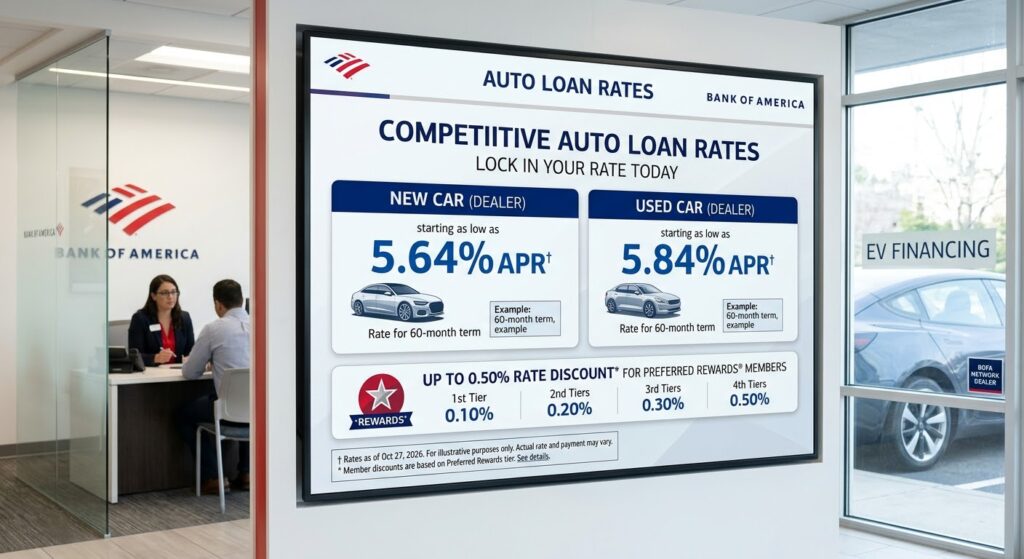
How Bank of America Auto Loan Rates Are Determined
Bank of America does not publish a single fixed rate for all customers. Instead, they use a tiered pricing model. The rate you are offered depends heavily on your creditworthiness. Generally, the rates fall into these broad categories (note that specific percentages change weekly based on the bond market):
- Super Prime (Excellent Credit): Borrowers with FICO scores above 750 typically receive the lowest advertised rates. These borrowers often see APRs ranging from 4% to 6% for new cars, depending on whether it is a direct loan or a dealer-assisted loan.
- Prime (Good Credit): Scores between 660 and 749 usually qualify for moderate rates. Expect APRs in the 6% to 9% range.
- Near-Prime/Subprime: Borrowers with scores between 600 and 659 may face higher rates, often starting around 9% to 12% or higher, depending on other risk factors like debt-to-income ratio.
New vs. Used Vehicle Rates
It is important to note that Bank of America (and most lenders) charges higher rates for used vehicles compared to new ones. This is because used cars depreciate faster and have less predictable maintenance histories. You might find a 4.5% rate for a new sedan but a 7.5% rate for a three-year-old SUV of similar value.
Key Factors That Influence Your Rate
Even if you have good credit, several variables can push your Bank of America auto loan rate up or down.
1. Credit Score and History
Your FICO score is the primary driver. Lenders view high scores as low risk. If you have missed payments, collections, or bankruptcies on your record, Bank of America will likely offer you a higher rate to offset that risk.
2. Debt-to-Income Ratio (DTI)
Lenders look at how much of your monthly income goes toward paying existing debts (credit cards, student loans, mortgages). A lower DTI indicates you have more disposable income to pay off the auto loan, which can lead to better terms.
3. Loan Term Length
Shorter loan terms generally come with lower interest rates. A 36-month or 48-month loan will have a lower APR than a 72-month or 84-month loan. However, shorter terms mean higher monthly payments. Longer terms lock in lower monthly payments but increase the total interest paid over the life of the loan.
4. Relationship Discounts
One of Bank of America’s unique advantages is its relationship pricing. If you already bank with them—holding checking accounts, savings accounts, or investment portfolios—you may qualify for a rate reduction. Typically, this discount is 0.25% to 0.50% off your base rate.
5. Direct vs. Dealer Financing
- Direct Loan: You apply directly through Bank of America, get pre-approved, and take the check to the dealership. This gives you negotiating power because you know exactly what your rate is.
- Dealer Financing: The dealership acts as a broker. They may offer promotional rates (e.g., 0% or 1.9% for 36 months) subsidized by the manufacturer. However, these often require excellent credit and short terms. Always compare the dealer’s offer with Bank of America’s direct pre-approval.
Current Market Context (2026)
In 2026, interest rates remain influenced by the Federal Reserve’s monetary policy. If the Fed has kept rates steady or lowered them slightly in response to inflation cooling, consumer loan rates have likely stabilized compared to the peaks seen in 2022–2023. However, rates are still higher than the historic lows of the early 2020s.
For the best results, borrowers should monitor the Treasury yield curve. Auto loan rates generally track closely with Treasury yields. If yields drop, auto loan rates tend to follow within a few days.
Tips to Get the Best Bank of America Auto Loan Rate
- Check Your Credit Report First: Dispute any errors before applying. Even a small improvement in your score can drop your APR by half a percent or more.
- Get Pre-Approved: Apply for a Bank of America auto loan online before visiting the dealership. This gives you a baseline rate to negotiate with dealers.
- Bundle Your Accounts: Ensure you are linked to Bank of America’s preferred banking products to trigger any available relationship discounts.
- Consider a Larger Down Payment: Putting down 20% or more reduces the lender’s risk and can help you qualify for a lower rate.
- Shop Around: Get quotes from two other banks or credit unions. Use those offers as leverage when talking to Bank of America’s loan officers. Sometimes they will match or beat competitor rates to win your business.
Conclusion
Bank of America remains a strong option for auto financing, particularly for customers who value convenience and potential relationship discounts. Their rates are competitive for prime borrowers but can vary significantly based on individual credit profiles. By understanding how rates are calculated, maintaining a healthy credit profile, and leveraging your existing banking relationships, you can secure a rate that minimizes your total cost and fits comfortably within your budget.
Disclaimer: The information provided in this article is for educational purposes only and does not constitute financial advice. Auto loan rates are subject to change without notice and depend on various factors including but not limited to credit score, loan term, vehicle type (new vs. used), geographic location, and prevailing market conditions. The rates mentioned are illustrative examples based on general market trends and may not reflect the exact rates offered to you by Bank of America at the time of application. Always review the official Bank of America website or consult with a loan officer for the most accurate and up-to-date rate quotes tailored to your specific financial situation.