
Buying a used car directly from its owner can open up more choices for buyers who want to find a vehicle within their budget. However, arranging payment for a privately sold car can sometimes be more complicated than purchasing one through a dealership. This is where private party auto loans can help eligible buyers finance a vehicle purchased directly from an individual rather than a licensed car dealer.
Whether you have found a reliable sedan, a family SUV, or a practical vehicle for everyday travel, understanding private party auto financing can make the purchasing process easier to navigate. This guide explains how these loans work, what lenders typically require, and how to protect yourself when buying a car from a private seller
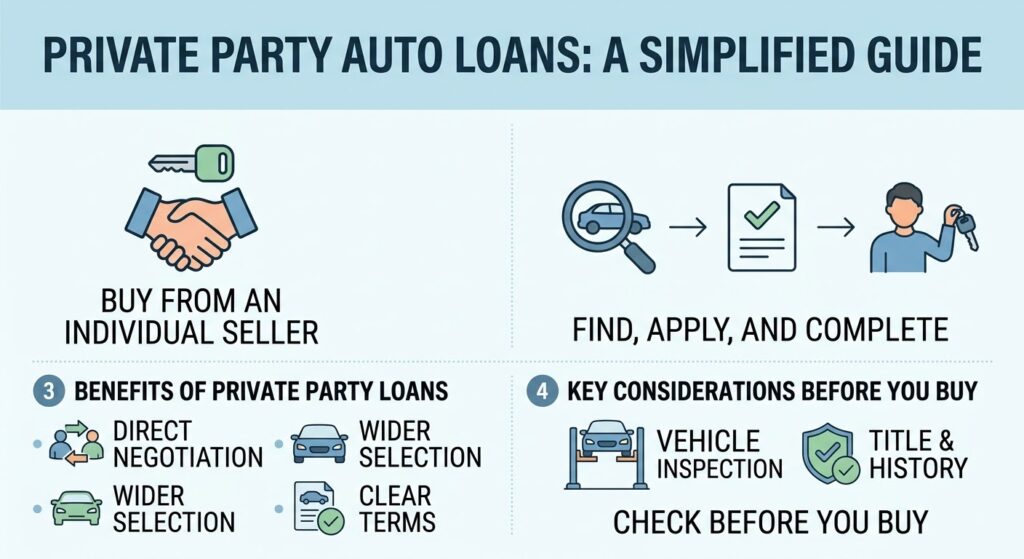
What Are Private Party Auto Loans?
Private party auto loans are vehicle loans designed for people who want to purchase a car directly from an individual owner. Instead of borrowing money to buy a vehicle from a dealership, the buyer applies for financing to complete a private sale.
These loans are offered by certain banks, credit unions, and other financial institutions. The lender may review the buyer’s credit history, income, the vehicle’s value, and other details before deciding whether to approve the application.
Unlike some dealership financing arrangements, a private party transaction usually requires the buyer and seller to coordinate the sale, payment, and ownership transfer themselves, subject to the lender’s requirements and local regulations.
How Do Private Party Auto Loans Work?
The process begins when you identify a vehicle being sold by its current owner. Before applying for financing, it is helpful to determine the car’s approximate market value and confirm that the seller has the legal right to sell it.
Once you have agreed on a price, you can approach a lender that supports private-party vehicle purchases.
A typical transaction may involve the following steps:
- Find a suitable vehicle: Search private listings, community marketplaces, or classified advertisements.
- Agree on the purchase price: Discuss the price with the owner and confirm the vehicle’s condition.
- Apply for a loan: Submit the requested financial information and details about the car.
- Complete vehicle checks: The lender may require a vehicle identification number (VIN), valuation, inspection, or title documentation.
- Arrange payment: If approved, the lender explains how funds will be disbursed to complete the transaction.
- Transfer ownership: Complete the necessary registration and ownership paperwork according to local requirements.
- Repay the loan: Make payments according to the agreed repayment schedule.
The exact process varies by lender, vehicle, and jurisdiction. Some lenders may pay the seller directly rather than releasing the loan funds to the buyer.
Where Can You Find Private Party Auto Loan Lenders?
Not every lender finances cars purchased from private individuals. Therefore, it is important to confirm that a provider specifically supports this type of transaction.
Banks and Credit Unions
Some banks and credit unions offer used-car loans that can be used for qualifying private-party purchases. They may provide information about interest rates, repayment periods, loan limits, and vehicle eligibility.
Online Auto Finance Providers
Certain online lenders allow borrowers to apply digitally and upload the documents needed for a private vehicle purchase. Before submitting an application, check the provider’s eligibility rules, fees, and reputation.
Personal Loans as an Alternative
If a traditional auto loan is unavailable, a personal loan may be another option, depending on local lending rules and your financial circumstances. However, personal loans can have different interest rates, security arrangements, and repayment conditions.
Compare the total borrowing cost rather than assuming one type of loan is automatically cheaper than another.
What Are the Requirements for Private Party Auto Loans?
Eligibility requirements differ between financial institutions, but lenders commonly consider several factors.
Credit history: Your credit profile can influence approval, the interest rate, and the amount you may borrow.
Income and affordability: Lenders may request proof of income or employment to assess whether the repayments are manageable.
Vehicle information: The car’s age, mileage, condition, market value, and identification details may affect eligibility.
Purchase documentation: A signed purchase agreement, seller information, registration documents, or proof of ownership may be required.
Insurance requirements: Some lenders require particular insurance coverage while the loan remains outstanding.
Down payment: Depending on the loan product, you may need to contribute part of the purchase price yourself.
Meeting the listed requirements does not guarantee approval. The lender will make its decision based on its own underwriting criteria.
Advantages of Buying a Car Through a Private Seller
Private vehicle purchases can offer several potential benefits when approached carefully.
More Flexibility in Vehicle Selection
Private listings may include models, trims, and older vehicles that are difficult to find at local dealerships. This can help buyers compare a broader range of options.
Opportunity to Negotiate
Some private sellers may be willing to negotiate based on the vehicle’s condition, mileage, maintenance records, and comparable market prices.
Direct Communication With the Owner
Speaking directly with the previous owner can help you learn about the car’s maintenance history, driving conditions, and any known mechanical issues.
Potential Savings
A privately listed car may cost less than a comparable dealership vehicle, although this is not guaranteed. Inspection costs, repairs, taxes, registration fees, and financing charges should all be included when comparing prices.
Potential Risks to Consider Before Applying
Although private party auto loans can make a purchase possible, buyers should understand the risks involved.
Hidden Mechanical Problems
A vehicle may look well maintained while having underlying mechanical issues. An independent pre-purchase inspection can help identify problems before you commit to buying it.
Outstanding Finance or Ownership Disputes
In some jurisdictions, a vehicle may have an outstanding lien or another legal restriction. Check the ownership records and relevant vehicle databases where available before completing the sale.
Financing Limitations
A lender may refuse to finance a vehicle that is too old, has excessive mileage, falls outside its valuation limits, or does not meet its documentation requirements.
Fraudulent Listings
Be cautious if a seller requests unusual payment methods, refuses an inspection, provides inconsistent documents, or pressures you to send money before verifying the vehicle.
Never rely solely on photographs or the seller’s description when making a significant purchase.
How to Compare Private Party Auto Loan Offers
Choosing a loan based only on the advertised monthly payment can lead to unexpected costs. A more effective approach is to compare the complete terms of each offer.
Consider these factors before making your decision:
- Annual percentage rate (APR): Where applicable, compare the APR to understand the annualized borrowing cost.
- Total repayment amount: Calculate how much you will repay over the entire loan term.
- Loan duration: A longer term may reduce monthly payments but increase the overall interest cost.
- Additional fees: Check for origination fees, administrative charges, and other applicable costs.
- Early repayment terms: Find out whether you can repay the loan early and whether charges apply.
- Collateral conditions: Understand whether the vehicle secures the loan and what happens if you miss payments.
- Payment arrangements: Confirm how the seller receives the money and when the vehicle can legally be transferred.
Request a written breakdown from the lender so you can compare offers on an equal basis.
Tips for Getting a Better Private Party Auto Loan Deal
Preparing before you apply can help you make a more informed decision.
First, establish a realistic purchase budget that includes more than the car’s selling price. Registration, insurance, inspections, maintenance, and unexpected repairs can add significantly to the cost of ownership.
Next, review your credit report if one is available in your country. Correcting inaccurate information before applying may help prevent avoidable problems.
It is also worth comparing multiple lenders, provided you understand whether each application involves a hard credit inquiry. Ask about prequalification options when available.
Finally, research the vehicle independently. Compare similar models, verify the VIN and ownership documents, and arrange an inspection with a qualified mechanic.
Most importantly, do not sign a loan agreement until you understand the interest rate, repayment schedule, total cost, and consequences of missed payments.
Are Private Party Auto Loans Available for Used Cars?
Yes. Private party auto loans are commonly associated with used vehicles purchased directly from individual owners. However, not every lender finances every used car.
Some providers impose restrictions based on vehicle age, mileage, condition, or minimum loan amount. Others may require the vehicle to meet specific valuation standards.
If you are considering an older or high-mileage car, check these conditions before negotiating a final purchase price. This can reduce the risk of agreeing to buy a vehicle that your chosen lender will not finance.
Frequently Asked Questions
Can I get a loan to buy a car from a private seller?
Yes, some banks, credit unions, and other lenders provide financing for eligible vehicles sold by private individuals. You must meet the lender’s requirements and complete the required paperwork.
Are private party auto loans different from dealership financing?
Yes. Private purchases generally involve direct coordination between the buyer and seller, while dealership financing may be arranged through the dealer or its financing partners. Approval criteria and loan terms vary by provider.
Can I use a private party auto loan to buy an older car?
Possibly. Lenders may have restrictions concerning vehicle age, mileage, condition, and value. Confirm these rules before applying.
Do private party auto loans require a down payment?
Some lenders require a down payment, while others may offer financing with different upfront payment arrangements to qualifying borrowers. The amount depends on the lender, the vehicle, and the applicant’s financial profile.
What documents should I check before buying a privately sold car?
Depending on your location, you may need to verify the registration certificate, proof of ownership, vehicle identification number, service records, sale agreement, and any relevant lien or finance records.
What happens if I cannot make my loan payments?
The consequences depend on the agreement and local law. Late fees, credit reporting consequences, collection activity, or repossession may apply when the vehicle secures the loan. Contact the lender promptly if you expect difficulty making payments.
Conclusion
Private party auto loans can help eligible buyers purchase vehicles directly from individual owners without paying the entire purchase price upfront. They may provide greater flexibility when searching for a suitable used car, but the financing process requires careful planning and verification.
Before proceeding, compare lenders, examine the vehicle’s condition and ownership history, and review every part of the loan agreement. A well-researched purchase can help you avoid unnecessary expenses and choose financing that fits your budget.
Disclaimer: Loan availability, interest rates, eligibility criteria, vehicle ownership procedures, and consumer protections vary by country and lender. Confirm the requirements that apply in your location before applying for financing.